From Induction to Impact in Mohave Valley
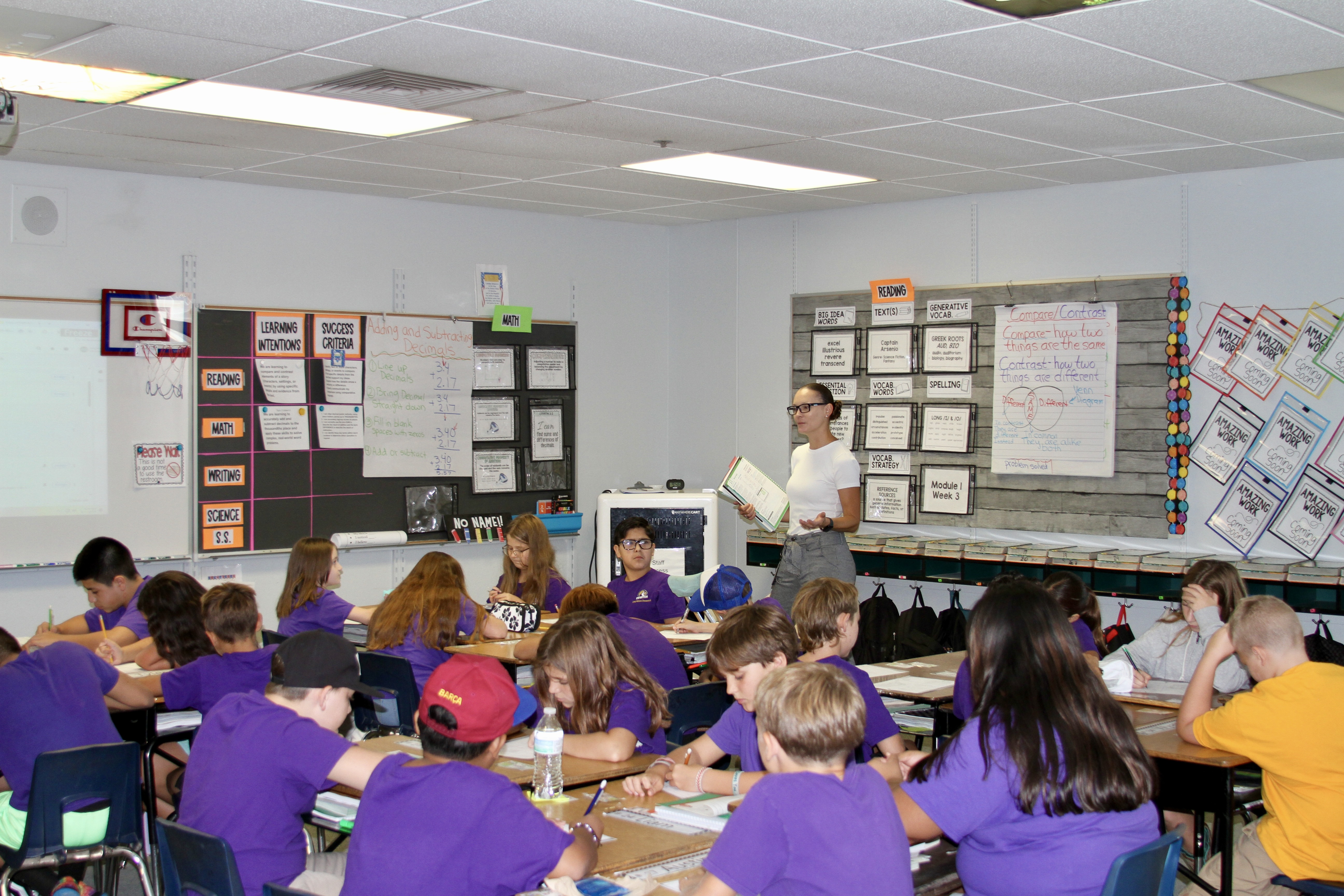
Mohave Valley Elementary School District showcases what is possible when a district commits to developing educators through mentoring, induction, and continuous learning.
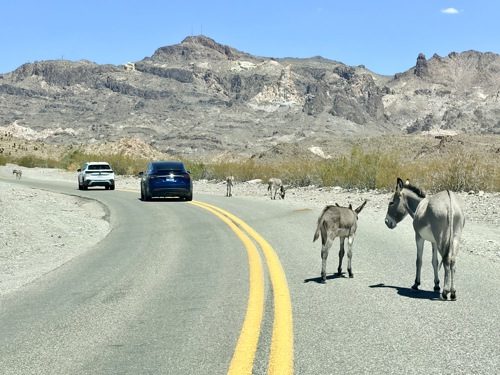
In a northwestern edge of Arizona, just minutes from both California and Nevada, sits Mohave Valley Elementary School District. This rural desert community may have been most known to some for the nonchalant donkeys that meander across roads near Oatman, but it’s quickly gaining attention for throwing off assumptions and challenges that face other Arizona school districts.
In 2020, when Cole Young came to Mohave Valley to lead as superintendent, he knew he needed to change mindsets. Enrollment had been decimated by competing districts, and “we defined ourselves by the obstacles we faced when I arrived,” he explained. “Now we define ourselves by our opportunities.”
An emphasis on data-driven instruction, investing in educator growth, and district-wide collaboration and cohesion, partly guided by Arizona K12 Center programming, is paying off.
Since 2020, MVESD has brought back about 400 students from competing schools. At the same time, staff numbers have expanded from approximately 155 to 200, with teacher retention at 90%.
Among its many accolades, Camp Mohave Elementary (grades 3-5) is an A+ School of Excellence and was recognized among America’s Best Schools. Mohave Valley Junior High School’s Innovation Lab, which includes state-of-the-art technology to introduce students to broadcasting, aviation, culinary arts, virtual reality, and other skillsets, has become a model for other districts in the region and pushed area high schools to expand their offerings. As the preK-2 school, Fort Mohave Elementary School sets the foundation for the youngest students entering the district.
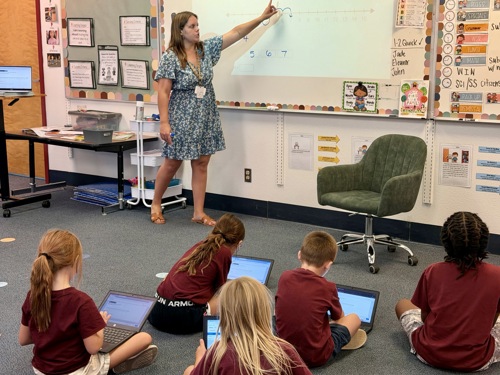
Prioritizing People Over Programs
Young’s first major initiative – aside from navigating the COVID pandemic – was to empower educators with their own learning and to take collaboration to new levels. Teachers and administrators worked together to analyze student data, align curriculum and standards, and strengthen instructional systems across the district. Building on that foundation, Young expanded support for staff through new leadership roles, including data coaches, and increased access to high-quality professional learning opportunities.
Aga Cook, a National Milken Educator Award winner, is now the district’s director of educational services but was a fifth grade teacher when she experienced how the data and standards work transformed how educators understood both academic performance and the broader factors affecting student success. Then, came the shift in support and opportunities for teachers.
“That investment in people was powerful,” Cook said. “It’s what Mr. Young always highlights, that really investing in people is the most powerful because that’s what makes the biggest shift in a classroom, that interaction between teacher and a student.”
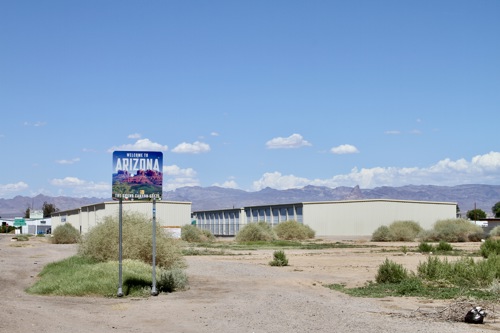 A “Welcome to Arizona” sign greets drivers heading east from California into the Mohave Valley Elementary School District region.
That investment in Mohave Valley’s educators included applying to be a district in the Arizona K12 Center’s Arizona New Teacher Support Program, which provides the structure, training, funding, and network to build a comprehensive, sustainable, research-based induction and mentoring program.
Through this program, the Arizona K12 Center trains experienced, accomplished teachers to become non-evaluative, instructional mentors to those in their first two years of teaching. The Center also provides ongoing professional learning specifically for both mentors and beginning teachers.
A part of the Arizona New Teacher Support Program since the fall of 2021, Mohave Valley has a Center-trained half-time release instructional mentor at each of its three schools. These mentors meet weekly with the beginning teachers (those in their first three years) at their sites. They also extend their support beyond new teachers by sharing resources, best practices, and professional learning from the Arizona K12 Center with educators across the district. They coordinate peer observations, provide professional learning opportunities, and engage in in-field coaching to strengthen collaboration and elevate Tier I instruction in every classroom.
Bethany Barton, in her seventh year of teaching but second at Mohave Valley, credits her mentor, Judy Chesla, with making her “a better teacher” by being someone she can go to for “guidance, feedback, and support with everyday classroom situations.”
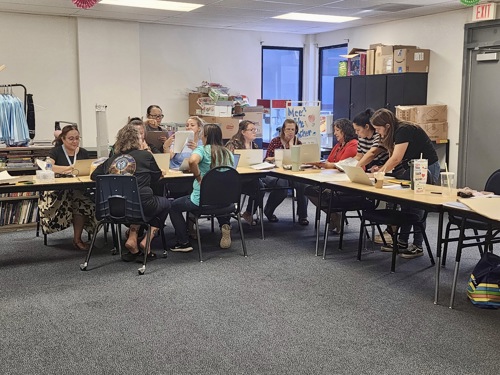
“My mentor has helped me work through challenges with classroom management, student needs, instructional strategies, and school expectations,” Barton said. “Having someone to collaborate with and learn from has helped me reflect on what is working, make adjustments when needed, and feel more confident in the decisions I make for my students.”
At the same time, Chesla notes strategies she has used in her own classroom after seeing Barton use them in her teaching. Learning from each other and collaborating, no matter the role or career length, is a tenet of the work in Mohave Valley.
“Helping each other to help the students is what we’re here for,” Chesla noted.
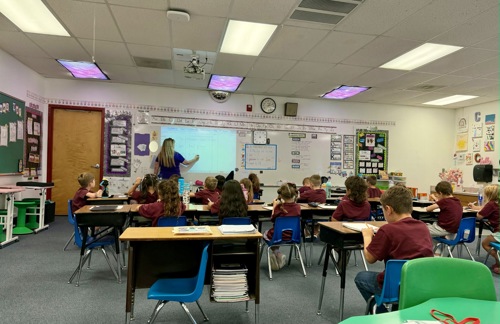
Emma Salari, a third-year teacher in the district, has worked with mentor Jennifer Van Rooy, the 2024 Arizona Rural Schools Association Teacher of the Year who has taught for 32 years.
“When you graduate college, you don’t really know what real life is going to hold,” Salari said. “Having Jennifer gave me someone I could go to with real-world questions and real-world challenges.”
Van Rooy wanted to mentor new teachers not only to support teacher quality but also a teacher’s longevity in this work.
“Having such a long career in teaching myself, I’ve seen, especially over the last maybe 10 years or so, teaching feel like it’s not a sustainable career for so many new teachers. You see it all over: you see it on social media, you see it in real life, you see it everywhere. And I’m living proof to say it can be a really sustainable career, and you can be happy even after 32 years, but you have to have the support to make it a sustainable career. That’s what it takes.”
The mentors, Cook, and Young are a part of the Arizona New Teacher Induction Network and have opened up the learning from those sessions to others in the district. They’ve also transformed their new teacher induction at the start of each school year.
Previously, new teachers essentially got their keys and a handbook and checked in with coworkers when they needed assistance. Mohave Valley’s new teacher induction before the start of school is now multiple days and includes administrators, mentors, instructional and data coaches, counselors, and others who are all part of the district’s team to support all students.
Camp Mohave Principal Rick Cottrell explained how “it was not a deep dive into district norms, district goals, district expectations, district resources. Those were things you found out as you went along, whereas now there’s a roadmap given to you up front.”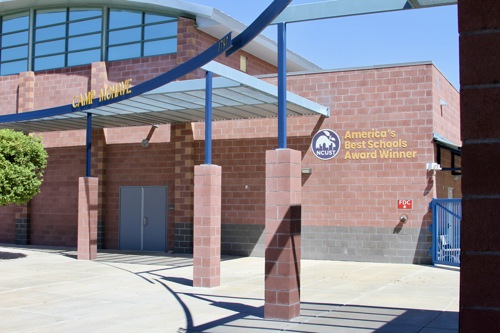
Applying Professional Learning
The collaboration Superintendent Young brought out in Mohave Valley educators extends to the district-wide understanding that educators support all district students. Teachers don’t only focus on the students in their room or only collaborate with others in their grade band. At Mohave Valley, you’ll find cross-school and vertical collaboration.
“These are all our kids,” Young often shares with staff.
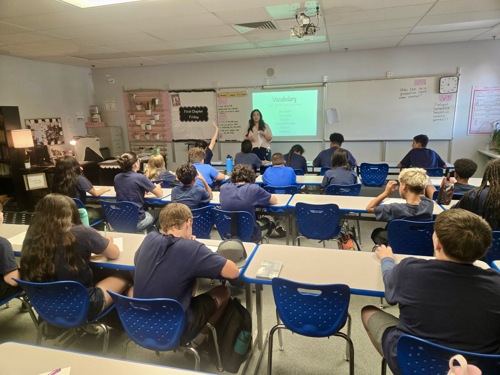
The MVESD Student Learning System Playbook, a distilled guide for all MVESD educators, is built on the four pillars of instruction TNTP shared through the 2026-2026 Arizona New Teacher Induction Network: high expectations, strong instruction, grade-level assignments, and deep student engagement. Lesson plan non-negotiables now include success criteria, thanks to Dr. Doug Fisher’s sessions at the Network meetings. Mohave Valley has also incorporated learning walks, Instructional Rounds, and Cognitive Coaching through the Arizona K12 Center.
“They’re always offering us opportunities for us to improve, to grow as educators and professionals,” said Camp Mohave mentor Angela Ritacca. “We always have something to look forward to.”
Continuing a Culture of Expectations and Success
For Young and Cook, continuous improvement remains the guiding principle.
The district’s next chapter focuses on strengthening Tier 1 instruction, deepening educational opportunities, expanding innovation programs, and ensuring that every student graduates ready to compete in a global economy. Young’s vision is to co-design the future together with students, parents, businesses, and community input.
The approach to that vision remains unchanged: Invest in people. Trust educators. Support students. Build systems that last. In Mohave Valley, those principles have created more than growth. They have created a culture where students, teachers, and families know extraordinary things are possible.
Mohave Valley’s culture of mentorship, professional learning, and shared responsibility for student success is an example of what is possible when schools invest deeply in educators. They have embraced what those at the Arizona K12 Center also know: sustainable student success begins with supporting the people who serve them every day.